
Demonstration hydrogen storage
We are confident that hydrogen storage in salt caverns is safe. As this is the first hydrogen storage facility in a Dutch salt cavern, we want to know everything about the potential risks and effects on the environment, techniques, and materials. Through an extensive series of checks, we are demonstrating that hydrogen storage in salt caverns is possible in a safe manner. We do it safely or we don't do it at all.
The A8 borehole was used in 2021 and 2022 to take as many measurements and carry out as many checks as possible. Our aim was to demonstrate that underground hydrogen storage is safe and that we can continue with the development of large-scale storage.
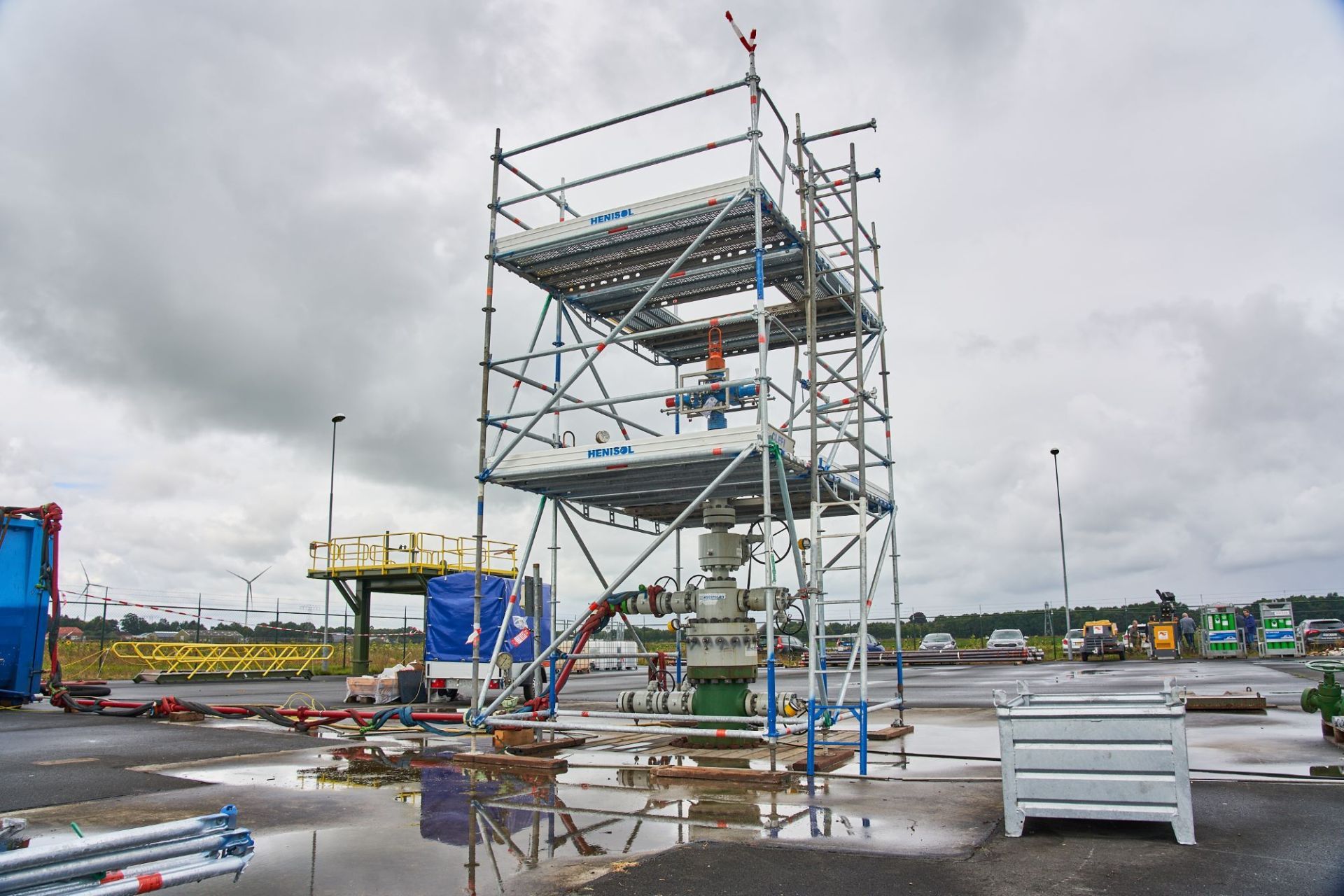
What we measure in A8
The borehole has a diameter of 30 centimeters and consists partly of a steel pipe and partly of a hole in the salt layer. In A8, we investigated the effect of hydrogen on our equipment, the materials used, the cement, and the salt wall. We used samples to check whether the hydrogen remained of good quality. We also looked at whether and how hydrogen requires a different working method and different inspection equipment than natural gas. For example, it is important that the shut-off systems remain tightly closed under pressure. This is because hydrogen is the smallest element known on earth.
After the measurements have been taken
As soon as we and the Ministry of Climate and Green Growth, advised by SodM and TNO, are satisfied with the measurements and the findings show that hydrogen storage is safe, we will take the next step: the further technical development of cavern A5. The knowledge gained from the A8 borehole will be incorporated into this process.
